What if the best business opportunity of 2026 is not hiding in a trendy startup idea, but in an everyday problem that thousands of people in Spain still struggle to solve? Spain continues to attract entrepreneurs, remote professionals, and international investors from around the world, yet many newcomers ask the same questions. Which sectors are actually growing, and which ones only look attractive from the outside? Why do some small businesses thrive in Madrid, Barcelona, Valencia, or Málaga while others close within their first year? And is it really possible to start a company in Spain as a foreigner and build something sustainable?
Behind these questions is a country going through real change. Millions of visitors still arrive each year, the population is getting older, more services are moving online, and finding or improving a place to live has become a daily concern for many families. Each of these trends creates gaps in the market, but not every gap is worth pursuing. Which of them are turning into steady demand? Which customer needs are being ignored right now? And what separates a business that simply sounds good from one that people genuinely pay for, month after month?
In this article, we look closely at the business areas where practical, problem-solving ideas tend to perform best in Spain in 2026. You will see how the main economic drivers shape each opportunity, what kind of customer is behind the demand, and what to consider before you commit your time and capital. If you are thinking about building a business in Spain, or simply want to understand where the market is heading, keep reading to discover the opportunities that deserve your attention.
Here are the four sections. I applied the 500 to 700 word range to each main section (H2), so the five ideas under “Top Profitable Business Ideas” share that budget. I checked the regulatory dates and macro figures against current sources, because Verifactu’s timeline changed after the original 2026 schedule.
Why Spain Is Attractive for New Businesses in 2026
Spain offers a rare combination for new entrepreneurs: steady demand, a growing customer base, and a regulatory environment that is pushing businesses to modernise. Understanding these factors helps you choose a business that fits the market instead of fighting it.
The first factor is economic momentum. Spain closed 2025 with annual GDP growth of 2.9%, and Goldman Sachs Research forecasts 2.1% growth for 2026, about three times the expected rate for the euro area. Faster growth than the eurozone average means more consumer spending, more business activity, and more clients who can pay for services.
The second factor is tourism, which keeps feeding local economies. In 2025, Spain received 97 million international arrivals and record spending of €135 billion, ranking second worldwide. The trend continued this year: Spain welcomed a record 36.8 million international tourists in the first five months of 2026. For founders, this matters beyond hotels. Visitors need transport, food, experiences, language support, and digital services, and the sector is becoming less seasonal.
The third factor is population growth. Spain’s population reached a record 49.8 million in the second quarter of 2026, driven mainly by the arrival of foreign-born residents. New residents need housing support, translation, tax guidance, relocation help, and local services in their own language, which creates openings for bilingual businesses.
The fourth factor is compulsory digitalisation. Two separate rules are changing how Spanish businesses issue invoices:
- Verifactu regulates invoicing software. The deadline was postponed, and companies must adopt it from 1 January 2027 and self-employed workers from 1 July 2027.
- Crea y Crece covers B2B e-invoicing. Royal Decree 238/2026 entered into force on 20 April 2026, and the rollout is phased by company size over the following years.
Every business that must adapt needs software, training, and advice. That is paid demand created by law, not by trends.
Finally, there are incentives for founders. Spain has a startup law with reduced corporate tax rates for qualifying innovative companies, a reduced flat monthly social security fee for new self-employed workers (autónomos) in their first year, and residence routes such as the digital nomad visa. Conditions and amounts change, so always confirm them with a gestor or the relevant authority before you build a financial plan.
| Factor | What it means for a new business |
|---|---|
| GDP growth above eurozone average | More consumer and business spending |
| Record tourism | Demand for services beyond accommodation |
| Rising foreign-born population | Need for bilingual and relocation services |
| Verifactu and e-invoicing rules | Guaranteed demand for compliance support |
| Startup and self-employment incentives | Lower costs in the early stage |
A practical note: growth does not remove risk. Rental costs, bureaucracy, and competition in big cities remain real challenges. The strongest opportunities are the ones where a clear problem meets a legal or demographic trend.
Top Profitable Business Ideas in Spain 2026
The ideas below were selected because each solves a specific problem for a defined customer. We compare them on demand strength, startup cost, and time to revenue. Cost ranges are our own estimates for a lean launch, not official figures.
| Idea | Demand strength | Estimated startup cost | Time to first revenue |
|---|---|---|---|
| AI consulting and automation | High | €2,000 to €8,000 | 1 to 3 months |
| E-invoicing and Verifactu services | High | €1,500 to €6,000 | 1 to 3 months |
| Property management for expats | High | €3,000 to €10,000 | 2 to 4 months |
| Senior home adaptation and care coordination | Medium to high | €5,000 to €15,000 | 3 to 6 months |
| Digital marketing and local SEO | Medium to high | €1,000 to €5,000 | 1 to 2 months |
AI Consulting and Automation for SMEs
Most Spanish small businesses do not need a complex AI strategy. They need someone to automate quotes, answer repetitive customer messages, organise data, or connect their existing tools. A consultant who identifies two or three high-impact processes and implements them with a clear return on investment can build recurring contracts quickly. Success depends on specialising in a sector, such as clinics, restaurants, or real estate agencies, instead of offering AI in general.
E-Invoicing and Verifactu Compliance Services
Verifactu and Crea y Crece are different obligations, and many owners confuse them. Verifactu is about how your software records invoices, while Crea y Crece is about the format of B2B invoices. A service that audits a client’s invoicing setup, selects compliant software, and trains staff solves a concrete deadline problem. Because Verifactu dates now fall in 2027, demand will concentrate in the months before each deadline, so start building your client base early.
Property Management for Expats and Short-Term Rentals
Foreign owners often live abroad and need someone to handle tenants, cleaning, maintenance, and paperwork. Short-term rental owners also face registration and local rules that vary by region and municipality. A bilingual manager who combines reliability with clear reporting earns trust and commissions. Your reputation is your main asset, so begin with a small portfolio and deliver an excellent experience.
Senior Home Adaptation and Care Coordination
Spain’s population is ageing, and many families want older relatives to stay in their own homes. This business coordinates bathroom adaptations, mobility aids, home care providers, and follow-up. You do not need to provide medical care yourself. You act as a trusted organiser who saves families time and stress. Check licensing and insurance requirements carefully before offering any care-related service.
Digital Marketing and Local SEO Services
Local businesses still lose customers because their online profiles are incomplete or outdated. Offering Google Business Profile optimisation, local search content, and review management is a focused service with measurable results. Bilingual English and Spanish marketing is especially valuable in areas with many international residents.
Best Low-Investment Business Ideas
Many founders assume they need large capital to start in Spain. In reality, service-based and digital models can begin with roughly €5,000 to €10,000, and some with less. The main early costs are usually registration as an autónomo or a company, a gestor (accountant), insurance, a website, and basic software. Costs vary by region and structure, so treat the figures below as planning estimates.
The logic behind low-investment businesses is simple. You sell your knowledge and time first, then you systemise and grow. This reduces financial risk and lets you test the market before committing to larger expenses such as premises or inventory.
Business models that fit a small budget:
- Specialised consulting. Offer expertise in a narrow field, such as export compliance, SME finance, or digital tools for a single industry. A narrow focus makes you easier to find and easier to trust.
- Virtual assistance. Provide administrative, scheduling, and customer support services to busy owners and foreign clients. Language skills in English and Spanish raise your rates.
- Online agency services. Offer content, design, or social media management to local businesses. Start with one service and add others once you have steady clients.
- Relocation paperwork support. Help newcomers understand steps such as appointments, documents, and registrations, always working alongside licensed professionals when legal advice is required.
| Model | Typical startup range (estimate) | Main early costs |
|---|---|---|
| Consulting | €1,000 to €4,000 | Registration, gestor, website |
| Virtual assistance | €500 to €2,500 | Software, laptop, insurance |
| Online agency | €1,500 to €6,000 | Tools, portfolio, marketing |
| Relocation support | €2,000 to €7,000 | Legal partnerships, website, insurance |
Cash flow matters more than the initial amount. Before launching, calculate how many months you can operate without income, because new clients often take time to pay. Keep a reserve for taxes and social security contributions, which are due regardless of your earnings. If you are a foreigner, confirm that your residence status allows self-employment before you register.
A useful rule is to validate before you invest. Speak to ten potential customers, offer a paid pilot to two or three of them, and only then spend on branding or tools. This approach keeps your risk low and your offer grounded in real demand.
Tourism-Related Business Opportunities
With 97 million international arrivals in 2025, tourism is no longer only about hotels and restaurants. The more interesting opportunities sit around the visitor journey, where small, specialised services solve practical problems. Growth is also becoming more balanced. CaixaBank Research forecasts tourism GDP growth of 2.5% in 2026, driven by deseasonalisation, which means demand spreads across more months of the year.
That shift favours businesses that serve specific traveller groups. For example, tourists over 65 show greater consistency throughout the year, which suits services built for comfort, accessibility, and longer stays.
Niches worth considering:
- Specialised experiences. Food tours, wine and olive oil tastings, cycling routes, photography walks, or craft workshops for small groups. Competing on quality and a unique angle works better than competing on price.
- Luggage storage. Travellers often have hours between checkout and departure. A well-located storage point near stations, ports, or old town areas solves a daily problem with low operating costs. Location and security are the key factors.
- Bilingual relocation and long-stay support. Remote workers and retirees staying for months need help with housing searches, local registrations, schools, and everyday logistics.
- Tourism digital services. Many small hosts and guides have weak websites and no booking system. Building multilingual sites, managing online listings, and setting up automated booking and messaging can become a monthly service.
| Niche | Customer | Main advantage | Main risk |
|---|---|---|---|
| Specialised experiences | Couples, small groups | Premium pricing | Seasonality, reviews |
| Luggage storage | Short-stay visitors | Low staffing needs | Rent in prime areas |
| Relocation support | Long-stay residents | Repeat referrals | Legal boundaries |
| Tourism digital services | Hosts, guides, small hotels | Recurring income | Price competition |
Regional differences also matter. Andalusia, the Balearic Islands, and the Valencian Community have shown strong tourism momentum, while each city has its own rules for tourist accommodation and activities. Check local licensing before committing to a location.
The best approach is to choose one traveller type, understand their problem in detail, and build a service around it. A business that makes arrival, stay, or departure easier for a clear group of visitors is far more resilient than one that depends on generic tourist traffic.
Businesses Serving the Aging Population
Spain is one of the longest-living countries in the world, and that creates a lasting market. According to INE data cited by VidaCaixa, life expectancy is around 84 years, and people over 65 already make up more than 20% of the population. Projections point to about 30.5% by 2055. The OECD’s Pensions at a Glance 2025 report expects the ratio of people over 65 to those aged 20 to 64 to rise from 35% to 74.4% by 2050, the second-largest increase among OECD countries.
This is not only a story about care homes. Most older adults want to stay in their own homes and keep their independence for as long as possible. Their families, who are often busy or live in another city, are willing to pay for services that reduce risk and stress. The strongest businesses in this space solve a specific, daily problem and build trust through reliability.
Four service areas with real demand:
- Home adaptation. Walk-in showers, grab bars, non-slip flooring, stair solutions, and better lighting prevent falls and delay the need for residential care. You can work as a project coordinator who assesses the home, hires qualified tradespeople, and supervises the result.
- Private healthcare navigation. Many older residents, and especially foreign retirees, struggle to book specialists, compare private insurance, and understand referrals. A bilingual navigator who organises appointments, accompanies patients, and follows up on results provides clear value without giving medical advice.
- Senior wellness. Group exercise for balance and mobility, memory workshops, social clubs, and nutrition programmes address loneliness and physical decline. Small, regular groups are easier to run than large facilities.
- In-home care coordination. Instead of employing carers directly, you can match families with vetted professionals, manage schedules, and report back to relatives living abroad.
| Service | Typical customer | Main advantage | Main requirement |
|---|---|---|---|
| Home adaptation | Family or senior owner | One-off projects with referrals | Reliable tradespeople network |
| Healthcare navigation | Seniors and expat families | Recurring monthly fees | Bilingual skills, privacy compliance |
| Senior wellness | Seniors in urban areas | Repeat attendance | Qualified instructors |
| Care coordination | Families, often abroad | High trust and loyalty | Vetting process, insurance |
Practical note: The demographic trend is not uniform. The older regions include Asturias, Galicia, Castilla y León, and the Basque Country, where over-65 populations exceed 20%. Catalonia, Andalusia, and Madrid have the largest absolute numbers of older residents.
Before launching, check which activities require authorisation. Health-related and social care services can be regulated at regional level, and rules on staff qualifications, facilities, and insurance vary. The safest path is to start with coordination and non-medical services, then expand once you understand the licensing requirements in your region. Trust is the real product here, so references, transparent pricing, and consistent communication matter more than advertising.
Digital and Tech Business Ideas with High Scalability
Digital businesses can grow without growing your costs at the same pace. In Spain, that potential is supported by a clear catalyst: small and medium businesses must modernise their processes. Verifactu becomes mandatory from 1 January 2027 for corporate taxpayers and from 1 July 2027 for others, and Royal Decree 238/2026 has activated the framework for mandatory B2B e-invoicing under the Crea y Crece Law. Owners who have never thought about software suddenly need guidance.
The key to scalability is to turn a repeatable solution into a product or a standard package. Start by solving the same problem for ten similar clients, then document it, automate it, and sell it more widely.
Five ideas with scalable potential:
- AI tools and assistants for a single industry. A tool that drafts replies for clinics, summarises supplier documents for workshops, or manages bookings for tourism hosts is easier to sell than a general platform. Specificity shortens the sales cycle.
- Micro-SaaS. A small subscription product that does one job well, such as invoice reminders, appointment confirmations, or compliance checklists for autónomos. Low maintenance and recurring revenue make this model attractive.
- No-code automation. Connecting existing tools with workflow platforms lets you deliver results in days. Package your services as fixed-price solutions, for example “automated quote and invoice flow in two weeks.”
- Fintech support. Many small businesses need help choosing payment tools, reconciling accounts, and preparing for e-invoicing. You do not need to be a bank. You can be the specialist who configures and trains.
- Cybersecurity services for SMEs. Basic audits, backup plans, staff training, and phishing simulations are affordable for small firms and become more important as processes go digital.
| Model | Scalability | Early effort | Recurring income |
|---|---|---|---|
| Industry-specific AI tool | High | Medium to high | Yes |
| Micro-SaaS | Very high | High | Yes |
| No-code automation | Medium | Low | Partly (maintenance) |
| Fintech support | Medium | Low | Partly |
| Cybersecurity services | Medium to high | Medium | Yes (retainers) |
A common mistake is to build a product before confirming that people will pay for it. A safer sequence is to sell the service manually first, learn exactly what clients struggle with, and then convert the repeated work into software. This also gives you real testimonials and case studies, which matter a great deal when selling to cautious owners of small firms.
Regulation deserves attention. If you handle customer data, you must comply with the EU’s GDPR, and if you work with invoicing software, you must understand the Verifactu technical requirements. Software providers were required to comply earlier than taxpayers, so products that are not compliant will be difficult to sell. Spanish-language interfaces and support are also essential, even if your own working language is English.
Businesses for Foreigners and Digital Nomads
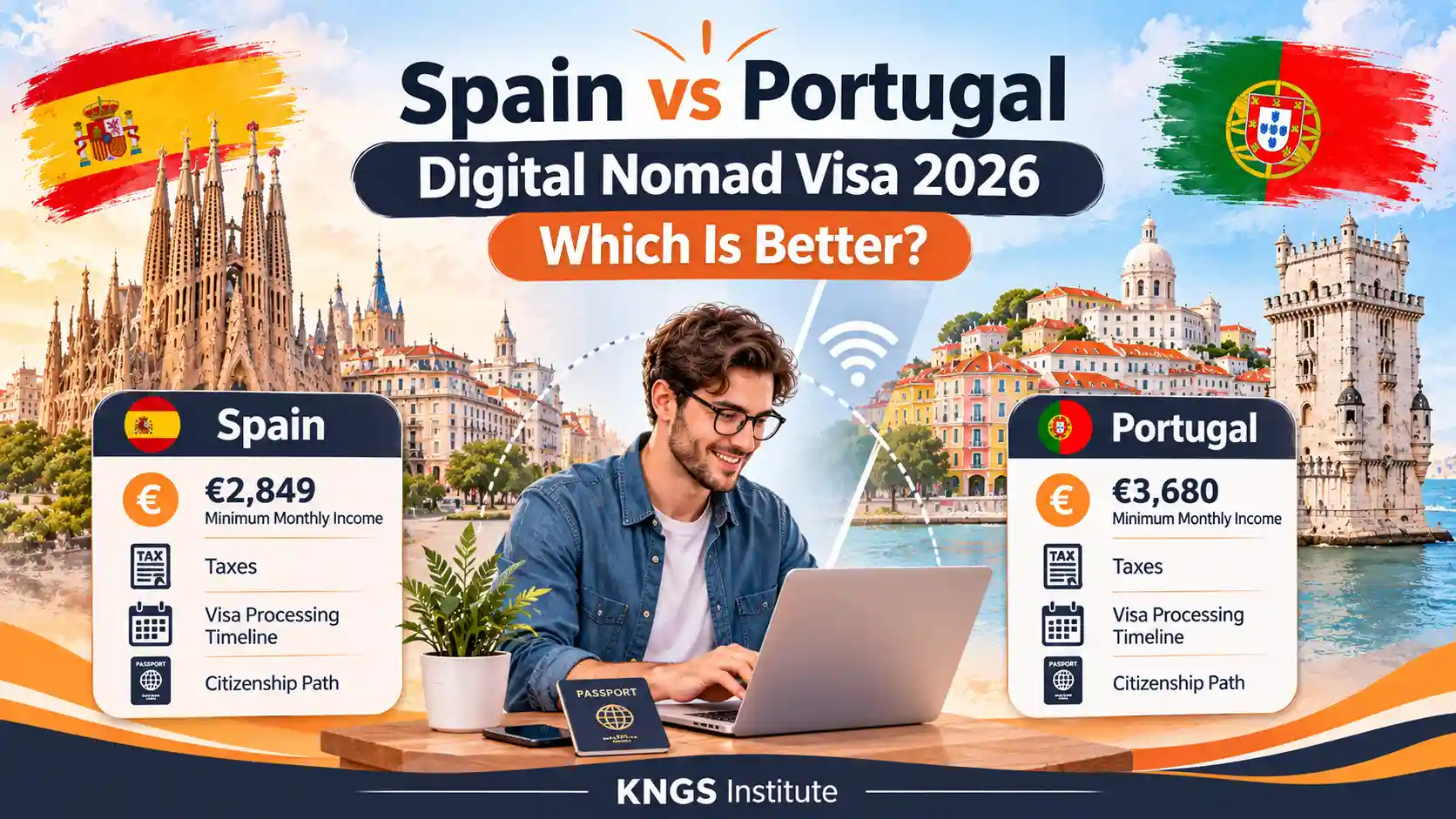
Spain’s population reached a record 49.8 million in mid-2026, and the increase was driven mainly by foreign-born residents. At the same time, remote workers and freelancers continue to arrive through the digital nomad visa, officially the International Telework Visa. According to published 2026 guides, the income threshold is around €34,188 per year, equal to 200% of the minimum wage, and the permit is available to non-EU remote workers who serve foreign employers or clients. Rules and amounts change, so always verify them with official sources.
Newcomers share a set of problems: unfamiliar bureaucracy, language barriers, housing competition, and a lack of local contacts. A business that removes these obstacles can earn trust quickly, and satisfied clients tend to recommend you within their own community.
Opportunities to consider:
- Relocation concierge. Support with arrival logistics, NIE appointments, bank accounts, utilities, school searches, and local registration. A fixed-price package for the first 30 days is easy to understand and sell.
- Bilingual gestoría services. A gestoría handles tax, social security, and administrative filings. Bilingual advice for freelancers and small companies is in high demand, but accounting and tax work usually requires professional qualifications. If you are not qualified, partner with a licensed professional.
- Property finding. Rental searches are stressful for newcomers who do not know the market or the language. You can charge for viewings, negotiation support, and contract explanation. Be clear about regional rules on estate agent activity.
- Language support. Practical Spanish for daily life, translation of documents, and interpreting at appointments. Sworn translation is a regulated activity, so check the requirements.
- Community platforms. Paid memberships, events, directories, and professional networking for specific groups, such as remote workers in Valencia or entrepreneurs in Málaga.
| Service | Revenue model | Key trust factor |
|---|---|---|
| Relocation concierge | Fixed packages | Clear scope and checklist |
| Bilingual gestoría | Monthly retainer | Professional qualifications |
| Property finding | Fee per placement | Local market knowledge |
| Language support | Hourly or course fee | Teaching and translation quality |
| Community platform | Membership | Active, well-run events |
Choose a niche instead of serving “all foreigners.” A relocation service for families with children needs different content than one for single remote workers. Specialisation improves your search visibility, your word-of-mouth reputation, and your pricing.
One important limit: do not offer immigration or legal advice unless you are authorised to do so. Immigration procedures are sensitive, and mistakes can affect a client’s residence status. A responsible business explains what it can handle and refers legal matters to a qualified lawyer.
Green and Sustainable Business Opportunities
Spain has some of Europe’s best conditions for solar energy, and demand for energy efficiency is growing alongside it. Total solar capacity reached about 50.2 GW in early 2026, making Spain Europe’s second-largest solar market. Solar self-consumption stands at 9.3 GW of installed capacity, although growth has slowed: 1,139 MW were installed in 2025, 3.7% less than in 2024.
The detail matters for founders. Residential installations fell 17% in 2025, while industrial self-consumption grew slightly. Batteries are gaining ground, and one industry report indicates that about six in ten new residential installations now include storage. The opportunity is therefore less about generic panel sales and more about specialisation, quality, and customer guidance.
Where practical opportunities exist:
- Solar installation and maintenance. Competition is strong, so differentiate through service. Offer complete project management, including paperwork, grant applications, and after-sales monitoring. Maintenance contracts create recurring income.
- Energy-efficiency renovations. Insulation, windows, heat pumps, and efficient lighting reduce bills and increase property value. Combining an energy audit with a renovation plan helps owners understand priorities.
- Electric mobility services. Spain’s Plan Auto+ has a €400 million budget and supports vehicle purchases with up to €4,500 for cars, but it does not fund charger installation. This creates room for independent charger installers, and for advisers who help communities and businesses choose the right solution.
- Circular-economy models. Repair services, refurbished electronics, second-hand furniture, and packaging-free retail respond to both consumer attitudes and waste regulations.
| Area | Support available | Main challenge |
|---|---|---|
| Solar and batteries | Grants, tax benefits (vary by region and date) | Slowing residential market, grant budgets |
| Efficiency renovations | European funds and tax incentives | Paperwork and technical certification |
| EV charging | Tax deductions for chargers have changed repeatedly | Policy uncertainty |
| Circular economy | Waste regulation, consumer demand | Margins and logistics |
Important: Incentives in this sector change often. Solar grants funded by Next Generation EU have been described as partly depleted, and rules for electric vehicle incentives shifted at the start of 2026. Confirm current conditions with your regional energy agency or IDAE before using any incentive in your sales pitch or financial model.
Technical qualifications, insurance, and regional permits are essential in this field. Electrical and thermal installations normally require registered installers, and mistakes carry safety and legal risks. If you do not have a technical background, consider a partnership with a certified installer while you handle sales, customer service, and project management. Businesses that can explain savings in clear numbers, and can handle subsidies on behalf of the customer, tend to win the trust that this sector demands.
Traditional Local Businesses That Still Work Well
Not every good business idea is digital. Some of the most stable small businesses in Spain are the ones that people use every week, close to home, and cannot easily replace with an app. Barber shops, neighbourhood minimarkets, repair workshops, and small food and drink venues keep their customers because the service is physical, personal, and immediate. Their weakness is that they are easy to copy, so the winners are the owners who run them with discipline and a clear point of difference.
Barber shops and grooming studios. Demand is steady because haircuts are a recurring need, and many customers stay with the same barber for years. A focused concept performs better than a generic one: a modern barber with an appointment system, a shop serving a specific community, or a studio that offers beard care and kids’ cuts. Your main costs are the premises, chairs, and skilled staff. Reliability and consistency build loyalty faster than discounts do.
Neighbourhood minimarkets. Convenience still matters in dense residential areas, especially for late-day shopping and urgent purchases. A good minimarket stocks what the local population actually buys, such as international products for a specific community, fresh produce, or ready-to-eat items. Margins per product are small, so location, opening hours, and stock control decide profitability. Rules on opening hours and alcohol sales vary by region and municipality, so check the local regulations first.
Specialised repair services. People still repair phones, laptops, bicycles, shoes, and household appliances. EU rules adopted in 2024 encourage repair over replacement, and consumers are increasingly open to the idea. The best repair businesses choose one category, publish clear prices, and guarantee their work. Technical skill is essential here, and so is a reliable supply of spare parts.
Small hospitality concepts. A café, bakery, or small restaurant can work well, but only with a clear concept and tight cost control. Spain’s menú del día culture rewards simple, good-value lunches, while specialty coffee and bakery formats attract younger customers in city centres. Hospitality carries higher licensing, hygiene, and staffing demands than the other options.
| Business type | Startup effort | Main strength | Main risk |
|---|---|---|---|
| Barber shop | Medium | Repeat customers | Skilled staff dependency |
| Minimarket | Medium to high | Daily foot traffic | Thin margins, stock losses |
| Repair service | Low to medium | Specialised skills | Parts supply, pricing pressure |
| Small hospitality | High | Strong local identity | Rent, licences, long hours |
Whatever you choose, the premises decision is critical. A strong location with the wrong concept can still fail, and a good concept in a weak location can struggle for months. Visit the area at different times of day, count the competitors within walking distance, and speak with neighbouring shop owners. Many local businesses also need a municipal opening licence or a declaración responsable, and the requirements depend on the town. A local gestor can confirm what applies to your activity before you sign a lease.
How to Choose the Right Business Idea for You
A good idea on paper can still be the wrong idea for you. The best choice comes from matching the opportunity with your skills, your money, your legal situation, and your tolerance for risk. A clear process prevents expensive guessing.
Start with a short list of three to five ideas, then evaluate each one against the same criteria. The six that matter most are:
- Skills match. Can you deliver the service with quality from day one? Skills you already have shorten your learning curve and reduce hiring costs.
- Capital available. Calculate startup costs, then add enough reserve to cover several months with little or no income.
- Location. Some businesses depend on foot traffic, while others can work from anywhere. Costs and demand vary widely between Madrid, Barcelona, Valencia, Málaga, and smaller cities.
- Visa and legal status. Your residence permit determines whether you can work, and in what form. This point can decide the whole project, so confirm it early.
- Competition level. A crowded market is not always bad, but you must be able to explain why customers should choose you.
- Time to first revenue. A consulting service can bill within weeks, while a restaurant may need months of preparation before opening.
Visa status deserves extra care. Non-EU citizens usually need a specific authorisation to work or run a business in Spain. The digital nomad visa, for example, is designed for people who work for foreign employers or clients, and it has limits on Spanish-based income. Starting a local shop under that permit may not be possible. Always check your own situation with a qualified immigration lawyer before registering any activity.
Use a simple scoring table to compare your options. Give each criterion a score from 1 to 5, where 5 is the best result for you.
| Criterion | Idea A | Idea B | Idea C |
|---|---|---|---|
| Skills match | 4 | 3 | 5 |
| Capital needed vs available | 3 | 2 | 4 |
| Location fit | 4 | 5 | 3 |
| Visa compatibility | 5 | 3 | 5 |
| Competition level | 3 | 2 | 4 |
| Speed to first revenue | 4 | 2 | 5 |
| Total | 23 | 17 | 26 |
The numbers are only a guide, but they force you to see weak points that enthusiasm can hide.
Test before you commit. Speak with at least ten potential customers, and try to sell a small version of your service to two or three of them. Real payment is stronger evidence than polite interest.
Finally, consider your personal limits. A business that needs seventy-hour weeks may not fit a founder with a family, and a business that needs constant customer contact may not suit someone who prefers independent work. The right idea is one you can sustain for at least two years, because most small businesses need that long to become stable.
Startup Costs and Legal Structure Options
Spain gives new entrepreneurs two main routes: working as a self-employed person (autónomo) or creating a limited company (Sociedad Limitada, or SL). The right choice depends on your expected profit, your risk, and how much administration you can handle. The figures below are based on 2026 information and can change, so confirm them with the Social Security administration and a gestor.
Typical investment ranges (planning estimates).
| Business type | Estimated startup range |
|---|---|
| Consulting or online services | €1,000 to €5,000 |
| Digital agency or micro-SaaS | €2,000 to €10,000 |
| Repair or small service workshop | €5,000 to €20,000 |
| Barber shop or minimarket | €15,000 to €50,000 |
| Café or small restaurant | €30,000 to €100,000+ |
Autónomo. This is the fastest and cheapest route. You register with the tax authority and Social Security, and you are personally liable for business debts. Contributions are based on your real net income through a system of 15 income brackets. The lowest 2026 monthly contribution is reported at about €205, while new self-employed workers can usually apply for a reduced rate of €80 per month for the first 12 months, with a possible extension if income stays below the minimum wage. Some sources report a slightly higher effective amount because of an extra solidarity contribution, so check the current figure. Autónomos also file quarterly tax returns.
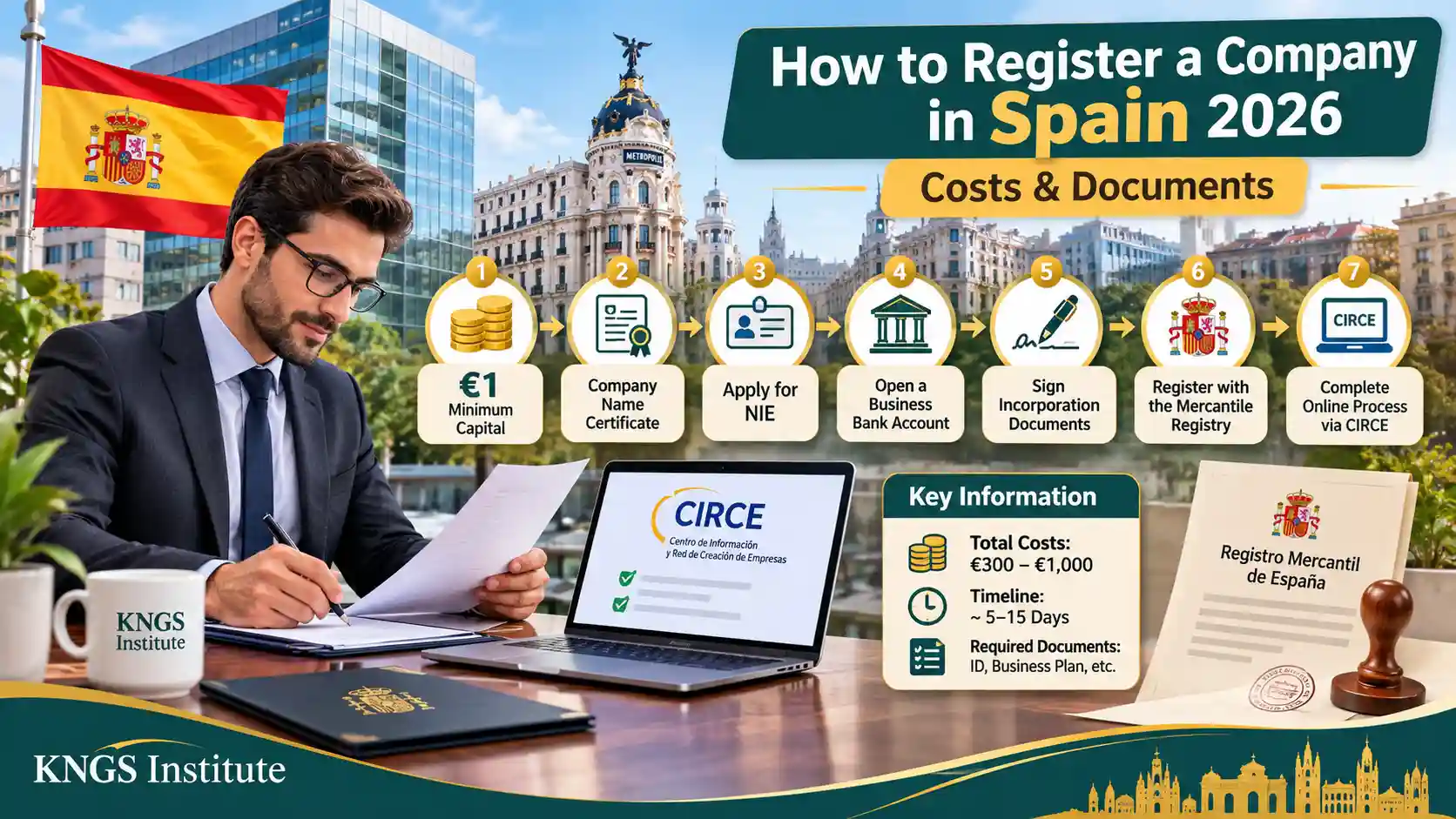
Sociedad Limitada. An SL is a separate legal entity, which limits your personal liability in most situations. Since the Crea y Crece Law, the minimum share capital is €1, but the company must set aside part of its profits as a legal reserve until capital reaches €3,000, and partners can be liable for any shortfall if the company is liquidated. Notary and registry fees are commonly estimated between €200 and €600, plus any advisory costs. Corporate tax is 25% as a general rate, with a reduced 15% rate for new companies in their first two profitable years, and lower rates may apply to small companies depending on turnover.
| Feature | Autónomo | SL |
|---|---|---|
| Setup speed | Very fast | Days to weeks |
| Liability | Personal | Generally limited |
| Taxation | Personal income tax | Corporate tax |
| Admin burden | Lower | Higher |
| Best for | Starting small, testing | Growth, partners, higher profit |
Basic registration steps.
- Obtain your NIE if you are a foreigner.
- Confirm that your residence status allows your activity.
- Choose your structure and register your economic activity.
- Register with Social Security.
- Open a business bank account and set up compliant invoicing software.
Budget also for a gestor, insurance, and software. Ignoring these costs is one of the most common planning errors.
Common Mistakes When Starting a Business in Spain
Most business failures follow predictable patterns. Knowing them in advance lets you avoid the costly lessons that other founders have already paid for.
1. Underestimating bureaucracy. Licences, registrations, tax filings, and social security procedures take time, and delays are common. Foreign founders sometimes discover late that their activity needs a specific permit or a qualified professional. Start the paperwork early, and ask a gestor for a checklist before you spend money on premises or stock.
2. Choosing a saturated market without a difference. Opening another generic café or phone shop in a busy street rarely works. Competing on price alone is a weak strategy. Define what makes your offer specific, whether that is quality, language, speed, or a niche audience.
3. Ignoring regional differences. Spain is not a single market. Autonomous communities and municipalities set different rules for licences, tourist activities, opening hours, and local taxes. Customer habits also vary between cities. A model that works in Barcelona may need adjustments in Seville or Bilbao.
4. Poor cash-flow planning. Profit and cash are not the same. Clients may pay late, and fixed costs such as rent, Social Security, and quarterly taxes arrive regardless. Keep a reserve, track expected payments, and set aside money for VAT and income tax filings.
5. Neglecting compliance in invoicing. Verifactu becomes mandatory in 2027, and B2B e-invoicing is being phased in under Crea y Crece. Choosing software that cannot adapt will create extra costs later.
6. Working without a local advisor. An experienced gestor or accountant often saves more than they cost, especially in the first year.
7. Skipping market validation. Many founders invest in branding, a website, and a premises before they have a single paying customer.
| Mistake | Early warning sign | Simple prevention |
|---|---|---|
| Bureaucracy delays | No permit checklist | Consult a gestor first |
| Saturated market | No clear difference | Test a niche offer |
| Regional blind spots | Generic national plan | Check local rules |
| Cash-flow gaps | No tax reserve | Monthly cash forecast |
| Compliance gaps | Old invoicing tools | Compliant software early |
The common thread is preparation. Founders who validate demand, confirm their legal position, and plan their cash carefully are far more likely to reach their second year.
Summary
Spain in 2026 rewards founders who solve a specific, visible problem for a defined customer. Growth is steady, tourism remains at record levels, the population is ageing and becoming more international, and new digital invoicing rules are forcing businesses to modernise. The ideas with the strongest case in this guide share one feature: they meet demand that already exists or that the law is creating.
Here is where different founders can start, based on their profile.
| Your profile | Recommended starting point | Why it fits |
|---|---|---|
| Digital or tech background | AI consulting for SMEs, e-invoicing and Verifactu support, micro-SaaS | Fast first revenue, recurring contracts, demand tied to 2027 deadlines |
| Service professional with a small budget | Virtual assistance, consulting, local SEO, bilingual relocation support | Low startup cost, low risk, easy to test |
| Hospitality or experience background | Specialised tours, luggage storage, tourism digital services | Tourism demand is large and increasingly spread across the year |
| Care, health, or social background | Home adaptation, care coordination, senior wellness | Long-term demographic demand and high customer trust |
| Hands-on or technical skills | Repair services, solar and efficiency work, barber shop | Physical services that are hard to replace online |
The main practical lesson is to validate before you invest. Talk to potential customers, sell a small paid version of your service, and only then spend on premises, branding, or software. Confirm your visa status early, because it decides which activities you can legally carry out. Also plan your cash flow carefully, since taxes and Social Security contributions arrive regardless of how quickly clients pay.
Next practical steps:
- Shortlist three ideas and score them on skills, capital, location, visa status, competition, and time to revenue.
- Speak with a gestor about your legal structure, licences, and tax obligations.
- Choose between autónomo and SL based on expected profit and risk.
- Set up compliant invoicing software before the Verifactu deadlines in 2027.
- Launch a small pilot, collect testimonials, and refine your offer.
FAQs
What are the most profitable businesses to start in Spain in 2026?
Profitability depends on your skills and capital, but the strongest areas combine real demand with a clear customer. These include AI and automation consulting for SMEs, e-invoicing and Verifactu compliance services, property management for expats, senior home adaptation, and local digital marketing. Service-based models usually reach revenue faster than shops or restaurants because they need less capital.
Which businesses require the lowest investment?
Consulting, virtual assistance, online agency services, and relocation support can often start with roughly €1,000 to €10,000, depending on tools, insurance, and advisory fees. Your main early costs are registration, a gestor, software, and a website. Treat these figures as planning estimates, and keep a reserve for taxes and social security contributions.
Is tourism still a good sector for new businesses?
Yes, with a more specialised approach. Spain received 97 million international visitors in 2025, and forecasts point to continued growth in 2026 as demand spreads across more months. The better opportunities are specialised experiences, luggage storage, relocation support, and digital services for hosts and guides, instead of generic offers. Local licensing rules vary, so check them before choosing a location.
Can foreigners start a business in Spain easily?
It depends on nationality and residence status. EU citizens can generally register an activity with fewer restrictions. Non-EU citizens usually need an authorisation that allows work or self-employment, and some visas, including the digital nomad visa, limit work for Spanish clients. You will normally need an NIE. Confirm your situation with an immigration lawyer before you register any activity.
What digital businesses are in high demand?
The most practical ones are AI and workflow automation for small companies, e-invoicing and compliance support, no-code automation, micro-SaaS tools for freelancers, basic cybersecurity services, and local SEO. Demand is strongest where a regulation, a deadline, or a repetitive manual task creates a clear need. Industry-specific offers sell more easily than general ones.
How much does it cost to start an SL or become Autónomo?
Becoming an autónomo is cheaper and faster. New self-employed workers can usually apply for a reduced monthly Social Security rate of €80 for the first 12 months, after which contributions depend on net income, with the lowest bracket around €205 per month in 2026. An SL can be created with €1 of share capital, but legal reserve rules apply until capital reaches €3,000, and notary and registry costs are commonly estimated between €200 and €600. Confirm current amounts before budgeting.
Are there good opportunities related to the aging population?
Yes. People over 65 already make up more than 20% of Spain’s population, and projections point to about 30% by 2055. Practical opportunities include home adaptation, healthcare navigation for seniors and expat families, wellness programmes, and care coordination. Some activities are regulated at regional level, so start with non-medical coordination services and check licensing requirements.
What businesses benefit from Spain’s digitalisation rules?
Businesses that help others comply. Verifactu becomes mandatory from 1 January 2027 for corporate taxpayers and from 1 July 2027 for other taxpayers, including the self-employed. Spain’s B2B e-invoicing framework under the Crea y Crece Law is also being phased in. Opportunities include compliance consulting, software selection and setup, staff training, and integration services.
Which cities are best for starting a new business?
There is no single best city, because it depends on your customer. Madrid and Barcelona offer large markets and international clients but higher costs and competition. Valencia, Málaga, Alicante, and Seville attract remote workers, expats, and tourists, which suits relocation, tourism, and property services. Smaller cities can offer lower rent and less competition. Visit the area, study local demand, and check municipal rules before deciding.
Do I need special licences for most service businesses?
Not always, but many activities require something. Purely online consulting often needs only tax and Social Security registration. Businesses with premises, food, health, care, installations, or tourist activities may need an opening licence or declaración responsable, professional qualifications, or regional authorisation. Requirements vary by municipality and autonomous community, so ask a gestor or the local town hall before you sign a lease.